Guided tour in the Necropolis of Tarquinia

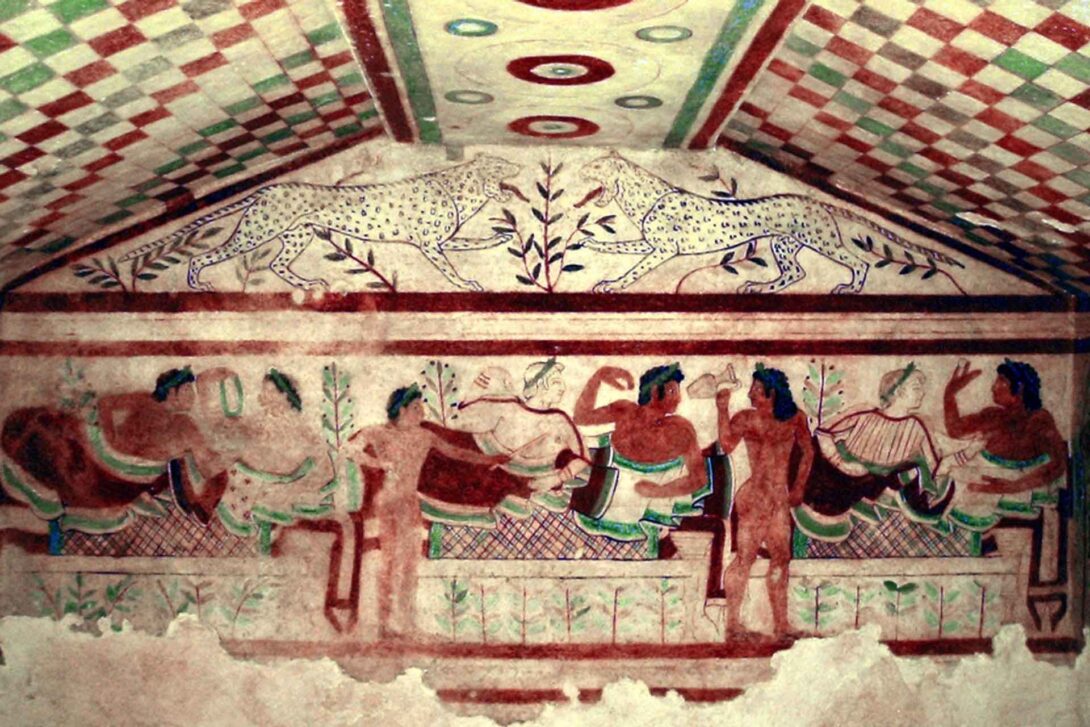
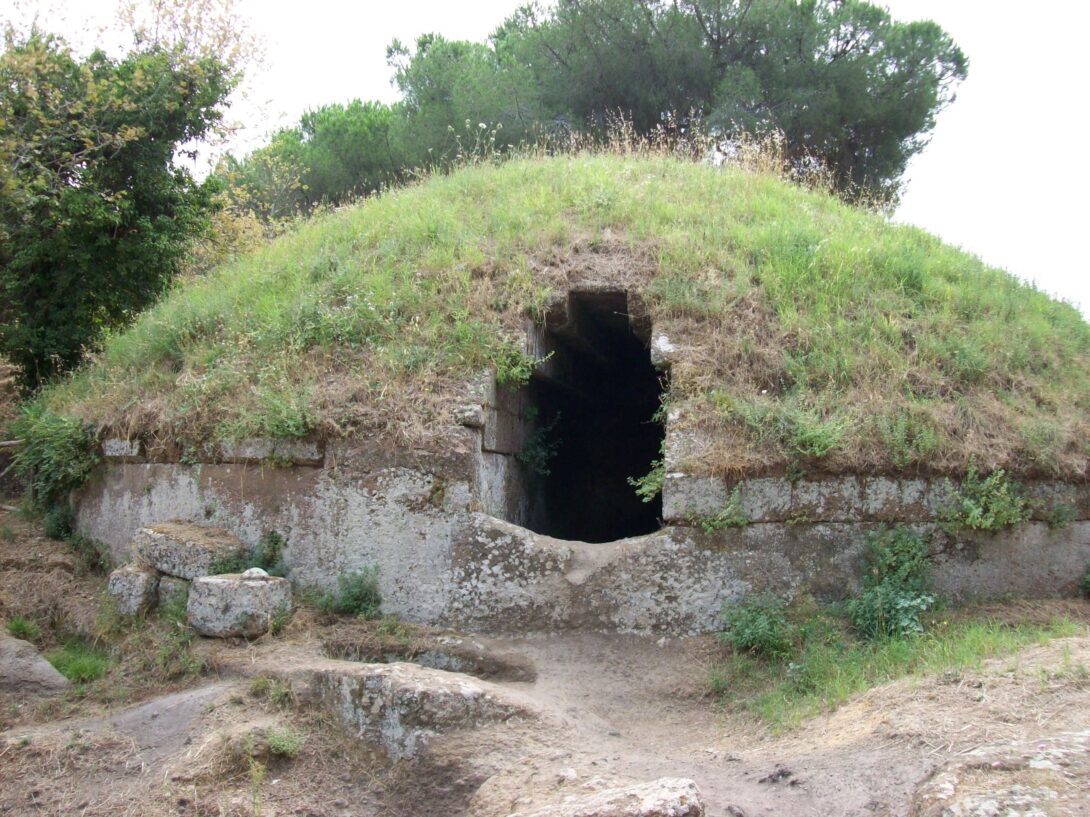
Tombs of aristocratic families decorated with paintings are documented in different Etruscan sites, but here in Tarquinia the phenomenon is particularly large and continuous over time: in fact, it is reported since VII to II sec b.C., which it means, for the whole lifetime of the city.
The section of the Necropolis open to visitors hosts some of the most outstanding painted hypogean tombs, such as the Tomb of the Lionesses, of Leopards, of the Hounting and Finshing etc.
Just outside of the Necropoli dei Monterozzi, on the other side of the street, it is possibile to walk along Fondo Scataglini, a site entirely dug in stone which allows tourits to understand how the necropolis should initially look like.
The National Archaeological Museum of Tarquinia
The floor ground hosts a collection of stone sarcophagi dating back to the mid-4th century BC. Of particular relevance are the sarcophagi Laris and Velthur – of the Partunus family – of the Magistrate, the Priest, the Obese and the Magnate.
On the first floor there is an interesting collection of finds, ranging from the Villanovan to the Roman period, with particular attention to the evolution of Greek and Etruscan painting. In this section there is the most famous piece of the whole museum, a unique work in the world, the high relief of the Winged Horses dating back to the 4th century. a.c., coming from the Altar of the Queen and also for just over two years the sculptural group depicting the god Mithras dating back to the second century. AD, an important testimony of the Roman period in Tarquinia.
Necropolis and archaeological Museum of Tarquinia: opening hour and tickets
Necropolis and museum can be visited from Tuesday to Sunday.
Opening hours of the Necropolis: from 9.00 to 17.00 (last admission at 16.00)
Opening hours of the museum from 9.00 to 19.30 (last admission at 18.30)
Entrance ticket for single site € 6.00 per person, reduced from 18 to 25 years € 2.00 per person, cumulative (necropolis + museum) € 10.00 per person, reduced from 18 to 25 years € 4.00, free for children up to 18 years of age, teachers and journalists.
Book your tour
Infoline: 338.8618856


Share: